
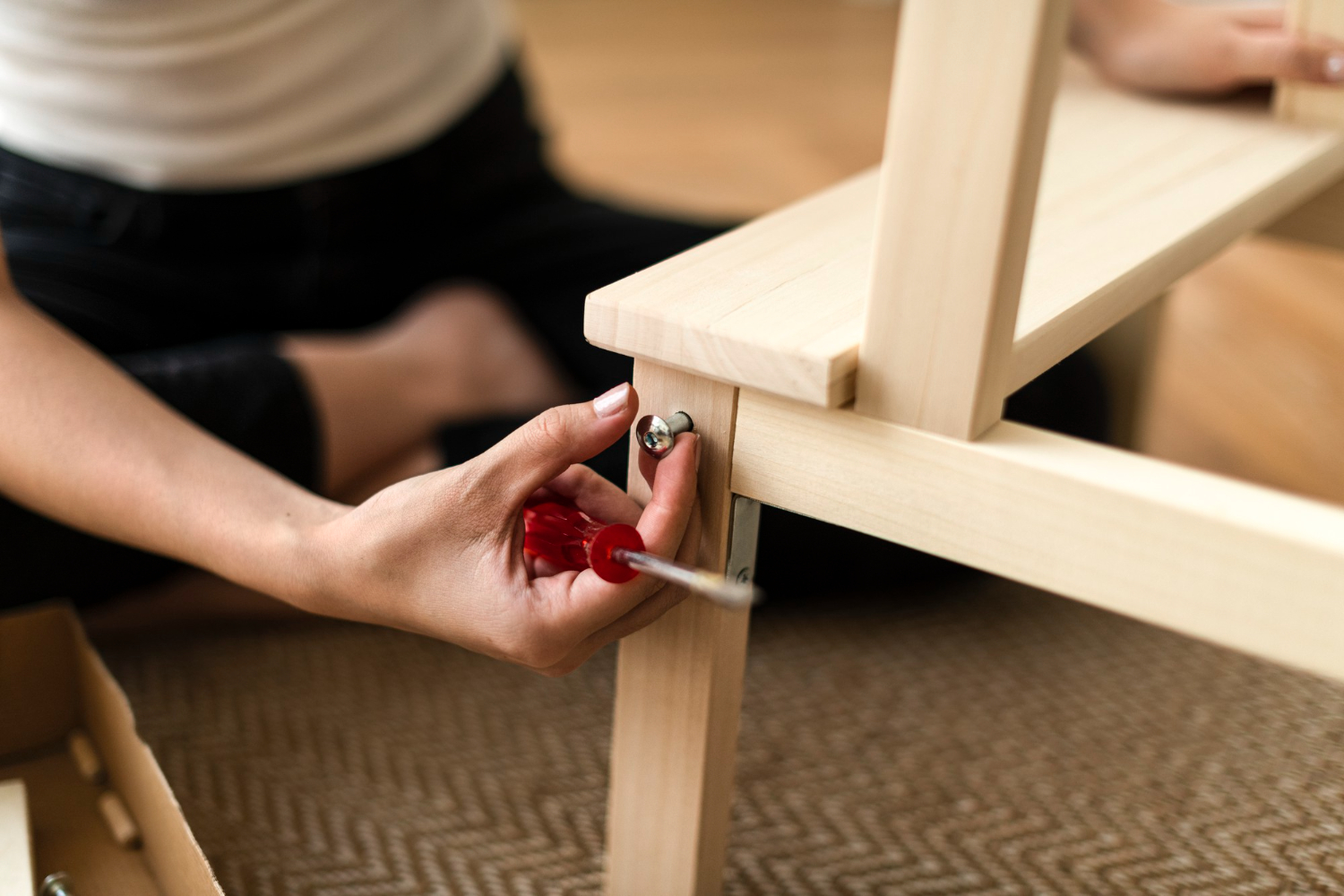
Loose screws and wobbly furniture have a way of showing up at the worst times. A chair starts to rock during dinner, a cabinet door won’t stay aligned, or a table feels unsteady when you lean on it. It might seem like a bigger repair than it really is, but most of these issues can be fixed in just a few minutes with simple tools and a bit of know how.
You do not need to be especially handy. These are small fixes that anyone can handle once you understand what is going on.
Why Things Get Loose
Over time, screws loosen from regular use. Wood can dry out or compress, making holes slightly larger. Hinges shift with repeated opening and closing. All of this adds up to movement where there should not be any.
The goal is not just to tighten things, but to make sure the screw has a solid grip again.
Tightening Loose Screws
Start with the obvious step. Use a screwdriver that fits the screw head properly and tighten it. If it catches and holds, you are done.
If the screw keeps spinning without tightening, the hole has likely become too large. This is a very common issue, especially with wood furniture.
Quick Fix with Toothpicks or Matches
Remove the screw and insert a couple of wooden toothpicks or matchsticks into the hole. Break them off so they sit flush with the surface. Then drive the screw back in.
The extra wood fills the space and gives the screw something to grip. It is a simple fix that works surprisingly well.
Using Wood Glue for a Stronger Hold
For a slightly more durable solution, add a drop of wood glue into the hole before inserting the toothpicks. Let it soak in for a moment, then reinsert the screw.
As the glue dries, it helps secure everything in place. This works well for furniture that gets frequent use, like chairs or table legs.
Fixing Loose Hinges
Cabinet doors and interior doors often sag because the hinge screws have loosened or worn out their holes.
First, tighten all the screws on the hinge. If the door is still misaligned, remove one screw at a time and use the toothpick method to reinforce the hole.
If the hinge itself is bent or damaged, replacing it may be the better option. Hinges are inexpensive and easy to swap out with a screwdriver.
Stabilizing Wobbly Furniture
Wobbly tables and chairs usually come down to uneven legs or loose joints.
Check for Loose Connections
Turn the furniture over and inspect where the legs connect. Tighten any visible screws or bolts. If joints are glued, you may need to reapply wood glue and clamp the area until it dries.
Fix Uneven Legs
If the wobble comes from uneven legs, place the furniture on a flat surface and test each leg. You can:
-
Add felt pads to the shorter leg
-
Lightly sand down a longer leg
-
Use a small furniture leveler if available
Even a small adjustment can make a big difference.
When to Use Thread Inserts or Anchors
If a screw hole is too damaged for a quick fix, you can use a threaded insert or wall anchor designed for wood. These create a new, secure place for the screw to grip.
This is a better option for heavier furniture or areas that take a lot of stress.
A Few Practical Tips
Always use the right size screwdriver to avoid stripping the screw head. Work slowly and apply steady pressure. If something feels forced, stop and reassess.
It also helps to check furniture every so often. Tightening a slightly loose screw early can prevent bigger problems later.
Loose screws and wobbly furniture are easy to ignore until they become annoying or even unsafe. The good news is that most fixes are quick, inexpensive, and require very little effort.
Once you know these simple techniques, you can handle small repairs as they come up. Instead of living with the wobble or calling for help, you can fix it yourself in just a few minutes and get back to using your space comfortably.